

Office Furniture Installation Cost in Los Angeles
Learn what affects commercial office furniture installation costs in Los Angeles, including furniture quantity, cubicle complexity, delivery, building access, scheduling, reconfiguration and relocation requirements.
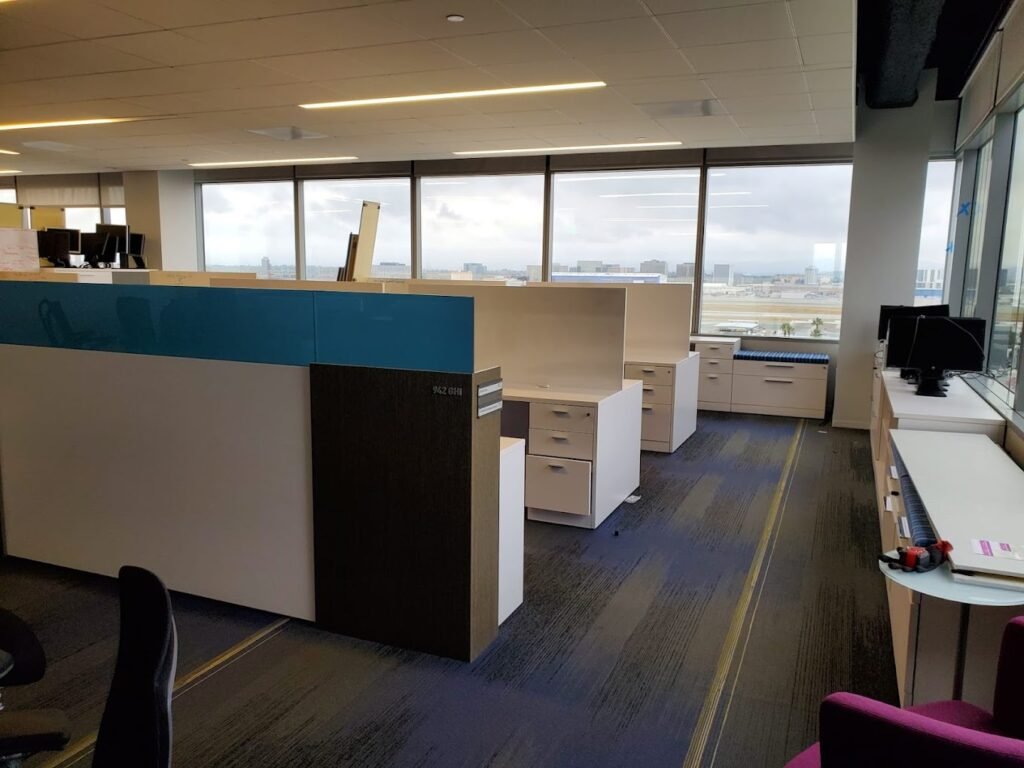
How much does office furniture installation cost?
There is no reliable universal price for commercial office furniture installation. The final cost depends on the number and type of furniture components, the complexity of the system, building access, delivery and staging requirements, permitted work hours, and whether disassembly, reconfiguration or relocation is included. A project-specific estimate is the most accurate way to establish cost.
Why office furniture installation costs vary by project
Two offices with the same number of employees can require very different installation scopes. Furniture design, room access, component condition and the approved floor plan can change the amount of labor and coordination required.
Installing standalone desks in an open room is generally less complex than assembling panel-based workstations with connectors, overhead storage, privacy screens and multiple layout configurations. A project may also require receiving, inventory, floor-by-floor staging, dismantling or destination reinstallation.
The purpose of this guide is to help Los Angeles businesses understand the variables behind an estimate. It is not a substitute for reviewing the actual furniture inventory, commercial building and requested schedule.
Explore our Los Angeles installation service →Factors that affect office furniture installation cost
A commercial estimate typically evaluates labor, logistics, access and project coordination together.
Furniture Quantity
More desks, panels, work surfaces, storage components and rooms require additional handling, assembly and placement.
Furniture System
Standalone furniture, modular workstations and panel-based cubicles require different tools, sequencing and installation labor.
New or Used Furniture
Previously installed furniture may require sorting, hardware verification, cleaning, adjustment or replacement components.
Building Access
Loading restrictions, freight elevators, parking, long carries and security procedures can increase coordination and labor time.
Delivery & Staging
Furniture may need to be received, inventoried, separated by room and staged according to the installation sequence.
Project Schedule
Phased work, restricted delivery windows, evenings, weekends and accelerated deadlines may require additional coordination.
Floor Plan Complexity
Multiple rooms, departments, floors or workstation configurations can increase layout verification and placement requirements.
Disassembly Required
Existing furniture may need to be dismantled, labeled and prepared before new installation or reconfiguration can begin.
Relocation Scope
Moving between buildings adds packing, transportation coordination, destination staging and professional reinstallation.
Which projects generally require more installation labor?
These levels are comparative, not price quotes. Actual cost still depends on quantities, access, furniture condition and scheduling.
| Project type | Relative complexity | What may be involved | Important estimate details |
|---|---|---|---|
| Standalone desks and tables | Lower | Assembly, leveling, placement and final adjustments. | Quantity, room locations, delivery condition and access. |
| Private offices and conference rooms | Moderate | Desks, credenzas, storage, conference tables and coordinated room placement. | Furniture dimensions, room layout, wall clearance and component count. |
| Modular benching workstations | Moderate | Frames, work surfaces, screens, storage, alignment and repeated workstation layouts. | Station count, installation drawings, electrical coordination and floor plan. |
| Panel-based cubicle systems | Higher | Panels, connectors, supports, work surfaces, overhead storage and layout sequencing. | Manufacturer, panel sizes, hardware, power components and workstation configuration. |
| Existing furniture reconfiguration | Higher | Dismantling, sorting, moving, revised layouts and reinstallation. | Current layout, proposed layout, missing parts and furniture condition. |
| Commercial office relocation | Higher | Tear-down, labeling, transportation, destination staging and reinstallation. | Both addresses, move sequence, elevators, transportation and completion deadline. |
How different office furniture projects are estimated
Each category involves a different combination of assembly, layout coordination and site logistics.
Desks and Private Offices
Estimates consider the number of desks, returns, credenzas, pedestals, shelves and rooms, as well as access and assembly requirements.
Conference and Collaboration Areas
Large tables, modular components, media furniture and room placement can require additional handling and coordination.
Cubicles and Panel Systems
Panel sizes, connectors, storage, power components and the number of repeated configurations are central to the estimate.
Reconfiguration Projects
Labor may include dismantling the current setup, moving components, interpreting a new floor plan and reinstalling the system.
Delivery and Installation
Receiving, unloading, floor distribution, room staging and installation sequencing may be included in the project scope.
Multi-Phase Commercial Projects
Projects involving multiple floors, departments or completion dates require additional planning, communication and staging.
Why cubicle systems often require a more detailed estimate
Cubicles and panel systems are assembled from multiple connected components. The installation scope depends on the system design, hardware, storage, power elements and workstation configuration.
A project with identical repeated cubicles may be more predictable than a layout containing different station sizes, missing components or a combination of new and existing panels.
- Panel height, width and connector type
- Work surfaces, brackets and support legs
- Overhead cabinets and storage components
- Privacy screens and accessory rails
- Power and data component coordination
- Existing hardware condition and compatibility
- Installation drawings and station configuration
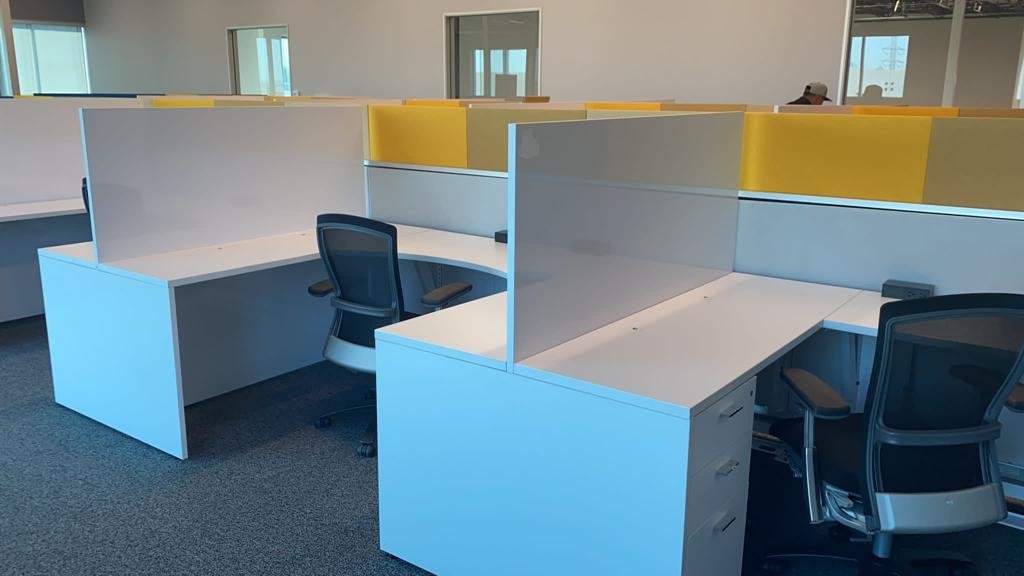
Does used office furniture cost more to install?
It can, but not always. The most important issue is whether the existing furniture is complete, compatible with the proposed layout and organized for installation.
| Consideration | New furniture | Previously installed furniture |
|---|---|---|
| Packaging and identification | Components may arrive labeled by item or manufacturer. | Components may need to be sorted, matched and relabeled. |
| Hardware | Required hardware is generally expected with the shipment. | Missing, mixed or damaged hardware may delay installation. |
| Condition | Components have not been exposed to prior wear or repeated disassembly. | Panels, connectors, surfaces or storage may require inspection and adjustment. |
| Layout compatibility | The order may have been prepared for the approved layout. | Existing sizes and components may not support every proposed configuration. |
| Preparation | Receiving and staging are often the primary preparation tasks. | Tear-down, inventory, cleaning and component grouping may be required first. |
What to send an office furniture installer
Complete project information helps the installation company understand labor, access, logistics and timing before preparing an estimate.
Not every item will be available at the beginning of a project. Send the information you have and identify any details that are still being confirmed.
- Project address
- Requested service
- Furniture manufacturer
- Furniture inventory
- Workstation or room count
- Current floor plan
- Proposed floor plan
- Installation drawings
- Project photographs
- Loading and parking details
- Elevator requirements
- Delivery information
- Preferred project dates
- Restricted work hours
- Storage requirements
- Completion deadline
How installation requirements change by scenario
These examples illustrate scope differences. They are not fixed packages or price quotes.
Small Professional Office Setup
A project may include private-office desks, a conference table, reception furniture and storage. Cost depends on item count, delivery condition, room access and assembly complexity.
Open-Office Workstation Installation
Multiple modular workstations are installed according to a floor plan. The estimate considers repeated configurations, screens, storage, alignment and floor distribution.
Existing Cubicle Reconfiguration
Current panels are dismantled, inventoried, rearranged and reinstalled in a new layout. Missing hardware and compatibility can affect labor and completion time.
Commercial Office Relocation
Furniture is dismantled at the current location, labeled, moved, staged and reinstalled at the destination. Both buildings and the move schedule affect cost.
Explore the service that matches your project
Use this cost guide for planning, then review the detailed service page for your specific installation or relocation needs.
Office furniture installation cost FAQs
These answers explain common pricing and estimate considerations for Los Angeles commercial furniture projects.
View All FAQsHow is office furniture installation priced?
Pricing may be structured around furniture quantity, workstation count, labor requirements, crew time, delivery, access and total project scope. A commercial proposal should clearly identify what is included.
Is cubicle installation more expensive than desk assembly?
Cubicle systems are generally more complex because they include panels, connectors, supports, work surfaces, storage and repeated configurations. The actual difference depends on the system and quantity.
Does building access affect installation cost?
Yes. Freight elevator schedules, loading docks, security, parking, long carries and restricted access windows can affect labor and logistics.
Can previously used office furniture be reinstalled?
Existing furniture can often be reinstalled when the components are in suitable condition, the necessary hardware is available and the system supports the proposed layout.
Are delivery and installation priced separately?
They may be separate or combined depending on the proposal. Confirm whether receiving, unloading, floor distribution, staging and debris handling are included.
Does an estimate include furniture disassembly?
Only when disassembly is included in the reviewed scope. Tell the installer whether existing furniture must be dismantled, labeled, moved, stored or removed before installation.
Can installation be completed after business hours?
Evening or weekend scheduling may be available depending on project scope, crew availability, building rules and requested dates. These requirements should be discussed before the estimate is finalized.
What information is needed for an accurate quote?
Provide the furniture inventory, manufacturer, workstation count, floor plan, installation drawings, photographs, project address, access details, delivery information and preferred schedule.
Does Elite Office Renovation provide estimates in Los Angeles?
Elite Office Renovation reviews commercial furniture installation, cubicle, reconfiguration and relocation projects throughout Los Angeles County and Southern California. Submit your project details for review.
Get an estimate based on your actual furniture project
Send your furniture inventory, floor plan, project address, photographs, access details and preferred schedule. Elite Office Renovation will review the scope and determine the appropriate next step.